Why Mopping Alone Isn't Enough for Commercial Kitchen Floors
Mopping can be part of a kitchen’s routine floor care, but it is not a complete answer to every type of buildup. When residue returns quickly or edges remain visibly soiled, review the whole process: what is being removed, how it is loosened and where the dirty solution goes.
By Alpha Cleaners · Cleaning guides
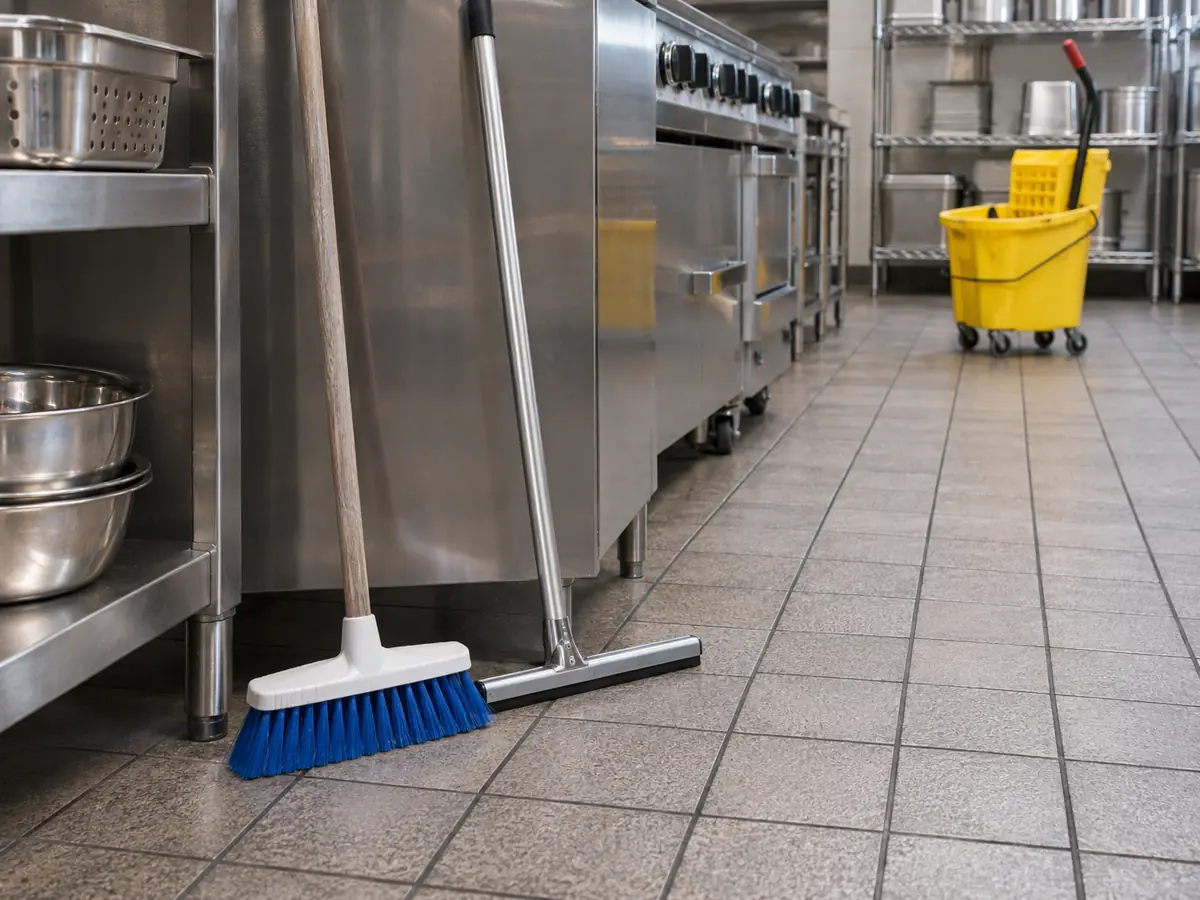
Editorial illustration
Look at what the routine is actually removing
A quick pass over the walking route may pick up loose soil while leaving material along edges, grout lines or accessible equipment bases. A busy kitchen can also transfer grease across the floor after the main cooking area has been cleaned.
Observe the condition before and after the usual routine. Record specific areas rather than judging the entire floor by shine. If the same marks or sticky residue remain, the useful question is which part of the process needs to change, not simply how many more times to mop.
Review product, agitation and recovery together
The cleaning approach needs to match the floor material and the soil present. Product selection, correct use, suitable agitation and removal of dirty solution work together. A deck brush or machine is not automatically appropriate for every surface, and more chemical is not a substitute for following instructions.
Ask the cleaning team how its method avoids redistributing soil and how equipment is maintained between areas. Discuss any rinse or recovery requirements in the product and surface guidance. The method should leave the floor ready for the agreed handoff rather than simply wet at the end of the visit.
Give detail areas their own plan
- Accessible floor edges and baseboards.
- Grout lines or textured surfaces with visible buildup.
- Transitions between cooking, dishwashing and storage.
- Agreed areas beneath or behind movable items.
- Spots repeatedly affected by leaks or traffic.
Clarify who can move equipment and what must remain in place. Cleaning staff should not disconnect or move fixed appliances on assumption. Separate inaccessible areas from missed tasks so management can arrange the right access.
Know when the issue is not cleaning
Persistent wetness may come from a leak, drainage issue or operating practice. A damaged floor may require repair. Cleaning can remove appropriate soil, but it does not establish technical slip resistance or correct a structural problem.
Use recurring observations to involve maintenance or the relevant flooring professional when needed. Our guide to slippery kitchen floors explains why several causes can exist at the same time. Keep immediate response procedures separate from the next scheduled contractor visit.
Questions about improving the routine
Should we stop mopping?
Not necessarily. Review its role within a suitable overall method instead of treating it as either the whole solution or always ineffective.
Does detailed cleaning replace daily care?
No. A deeper service and routine maintenance address different needs.
What should we ask a provider?
Discuss floor material, buildup, equipment access and handoff expectations. Review kitchen floor degreasing and back-of-house cleaning before agreeing the scope and frequency.
Build a cleaning plan around your restaurant
Tell us about your facility, operating hours and cleaning priorities. Alpha Cleaners will confirm the service scope and availability during a complimentary walkthrough.