Common Cleaning Problems in High-Volume Restaurant Kitchens
High-volume kitchens often have cleaning problems that are partly scheduling and coordination problems. When the same area is repeatedly missed, look at how work moves through the kitchen, who owns the task and whether the cleaning window is realistic.
By Alpha Cleaners · Cleaning guides
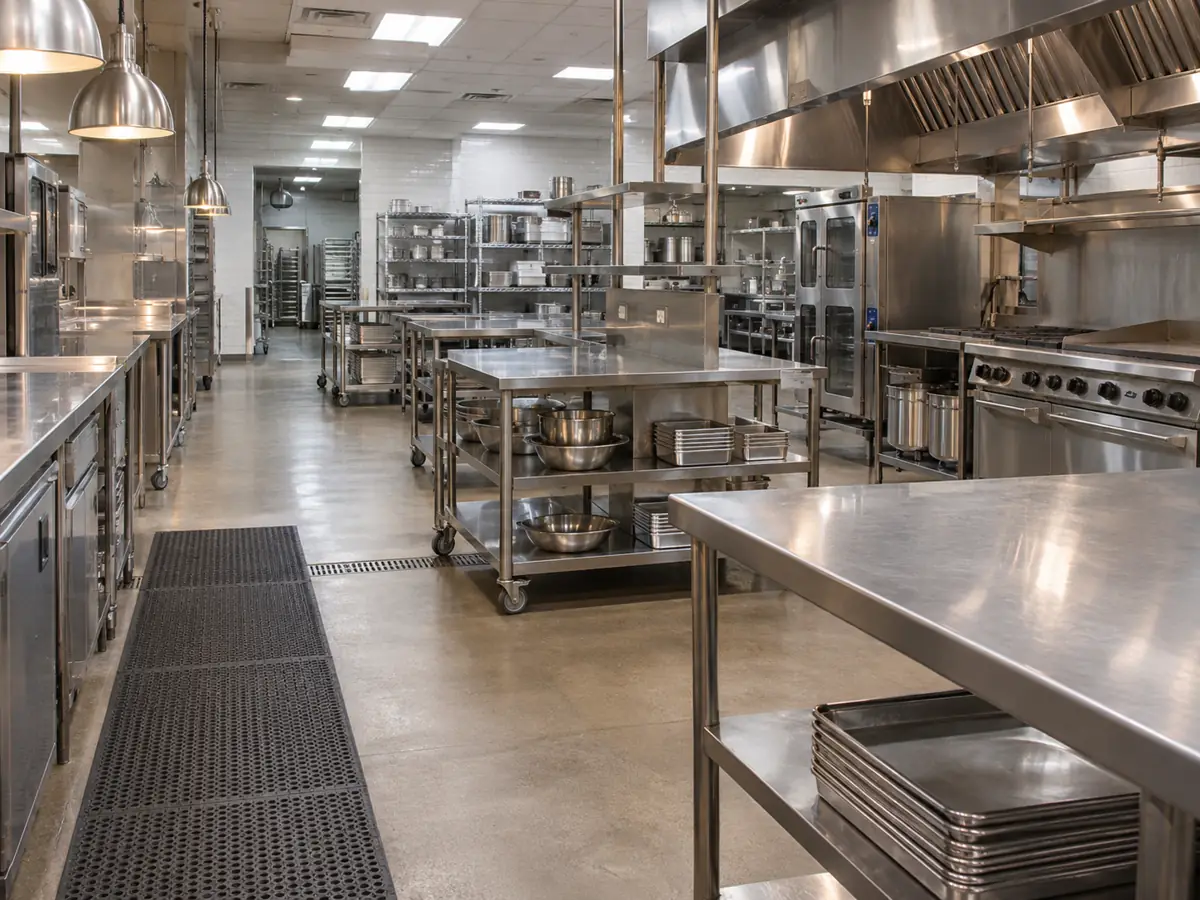
Editorial illustration
Problem: closing duties run into cleaning time
A crew cannot fully work in an area still being used for food preparation, dishwashing or staff closeout. If the service finishes later than planned, an unchanged cleaning deadline can leave less usable time for the same scope.
Review actual handoff times over several shifts. Identify which areas can be released first and which remain active longest. Agree how the manager communicates late changes and what happens when the planned work cannot fit. An after-hours service plan needs a real working window, not just a nominal arrival time.
Problem: soil keeps moving between zones
Kitchen traffic can connect cooking, dishwashing, waste storage and preparation areas. If a recurring issue follows one route, consider the source as well as the destination. Cleaning the visible spot may not address what keeps bringing material back.
Ask the team to observe the pattern without disrupting service. Check the routine for spills, waste movement and equipment storage. Keep immediate staff response separate from periodic contractor work, and involve maintenance where leaks or damaged surfaces contribute.
Problem: detail areas are always inaccessible
- Stored items block floor edges or shelving.
- Movable items have no agreed temporary location.
- Fixed equipment is treated as though it can be moved freely.
- Deliveries occupy the work area during the cleaning window.
- No one owns preparation for periodic detail work.
Create an access list with a responsible person for each item. Mark areas that require a specialist or a separate arrangement. This turns a repeated “missed area” complaint into a practical decision about preparation and scope.
Problem: yesterday's checklist no longer fits
Menu changes, longer hours and additional production can alter the workload. A checklist created for a quieter operation may omit newly used areas or allocate too little time to busy ones. Review the plan when the operation changes rather than waiting for complaints to accumulate.
Track recurring observations by zone: location, condition, likely constraint and assigned follow-up. Discuss the pattern at a scheduled review. The answer may be an adjusted task, better access, additional detail work or a maintenance referral, rather than simply adding more visits everywhere.
Questions for busy kitchen managers
Should every problem trigger a deep clean?
No. First identify whether the cause is soil removal, access, timing or a maintenance issue.
What should managers document?
Record the specific area, when the problem appears and any barrier to completing the task.
How can professional cleaning fit the operation?
Use a walkthrough to align back-of-house cleaning with the actual closing routine. Bring the restaurant checklist and highlight tasks that are regularly deferred or unclear.
Build a cleaning plan around your restaurant
Tell us about your facility, operating hours and cleaning priorities. Alpha Cleaners will confirm the service scope and availability during a complimentary walkthrough.