Why Restaurant Kitchen Floors Become Slippery
A slippery kitchen floor is a condition to investigate, not a reason to keep repeating the same mop routine. Grease, moisture, food debris and cleaning residue can contribute. Start with the location and timing of the problem, then assign the right corrective action.
By Alpha Cleaners · Cleaning guides
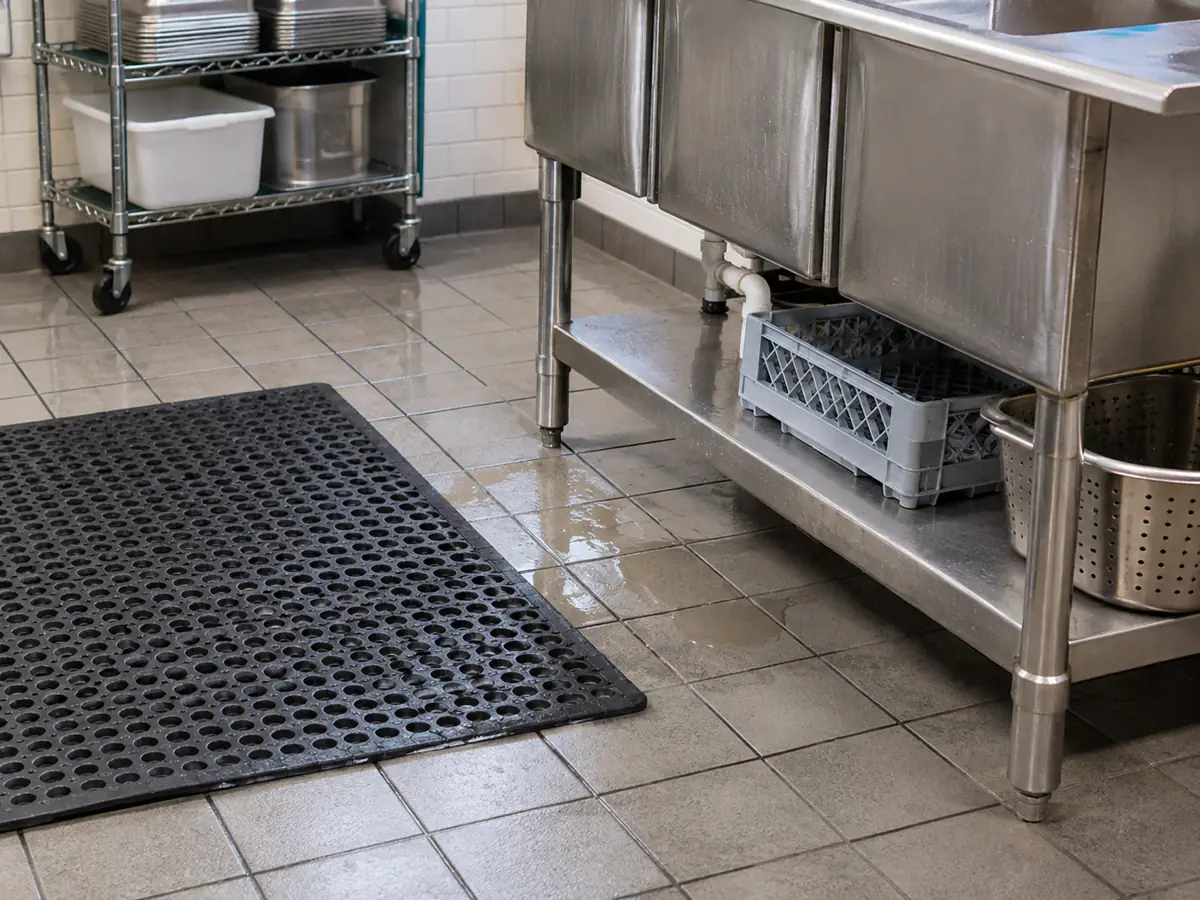
Editorial illustration
Trace when and where the problem starts
Ask staff to record the area, time and activity associated with a recurring problem. A wet spot beside dishwashing may have a different source from a greasy route between the cooking line and waste storage. Compare conditions before service, during peak periods and after closing.
Do not test traction by deliberately sliding a foot across the floor. Keep people out of an affected area as appropriate and follow the restaurant’s response procedure. A maintenance issue such as a leak should be reported to the person who can repair it.
Common causes to review
- Grease transfer: cooking activity, footwear and movement through the kitchen can spread soil.
- Water: splashes, leaks and incomplete recovery can leave moisture where people walk.
- Cleaning residue: an unsuitable product or incorrect use may leave material behind.
- Surface condition: damaged or worn flooring needs a separate assessment.
- Traffic and mats: check placement, condition and suitability for the area.
A clean appearance does not establish technical slip resistance. Avoid judging safety from shine or a photograph.
Review the cleaning process as a whole
Discuss the floor material, soil type, approved products and how dirty solution is removed. More chemical is not automatically more effective. The cleaning team should follow product and surface instructions rather than adjusting concentration by guesswork.
If recurring grease is the issue, review the agreed kitchen floor cleaning scope. Our floor degreasing guide explains the access and handoff questions to ask before detailed work.
Keep prevention and response connected
OSHA’s restaurant cleanup guidance emphasizes clear walkways, prompt spill cleanup, appropriate footwear and measures for wet floor areas. Its guidance also describes the employer’s responsibility to provide safe working conditions. See OSHA: Restaurant Cleanup for the full guidance.
Build these issues into the manager’s review route. A cleaning contractor’s scheduled visit does not replace the restaurant’s immediate response to a spill during service. Record repeat issues so the next conversation addresses their source.
Questions owners ask
Will degreasing fix every slippery floor?
No. Grease removal will not repair a leak or damaged surface. Several causes can exist at once.
Should we increase mopping frequency?
First check whether the method is suitable and whether it removes the soil. Repeating an ineffective process may leave the original issue unresolved.
Who should review ongoing concerns?
Include restaurant management, the cleaning provider and the relevant maintenance or flooring professional when necessary.
Build a cleaning plan around your restaurant
Tell us about your facility, operating hours and cleaning priorities. Alpha Cleaners will confirm the service scope and availability during a complimentary walkthrough.