Restaurant Kitchen Floor Degreasing: What Owners Need to Know
Kitchen floor degreasing addresses grease and soil that routine floor care may leave behind. The right approach depends on the floor material, condition, access and approved products. Owners should focus on a clearly defined scope and a usable handoff—not a promise that one treatment will permanently solve every slippery-floor problem.
By Alpha Cleaners · Cleaning guides
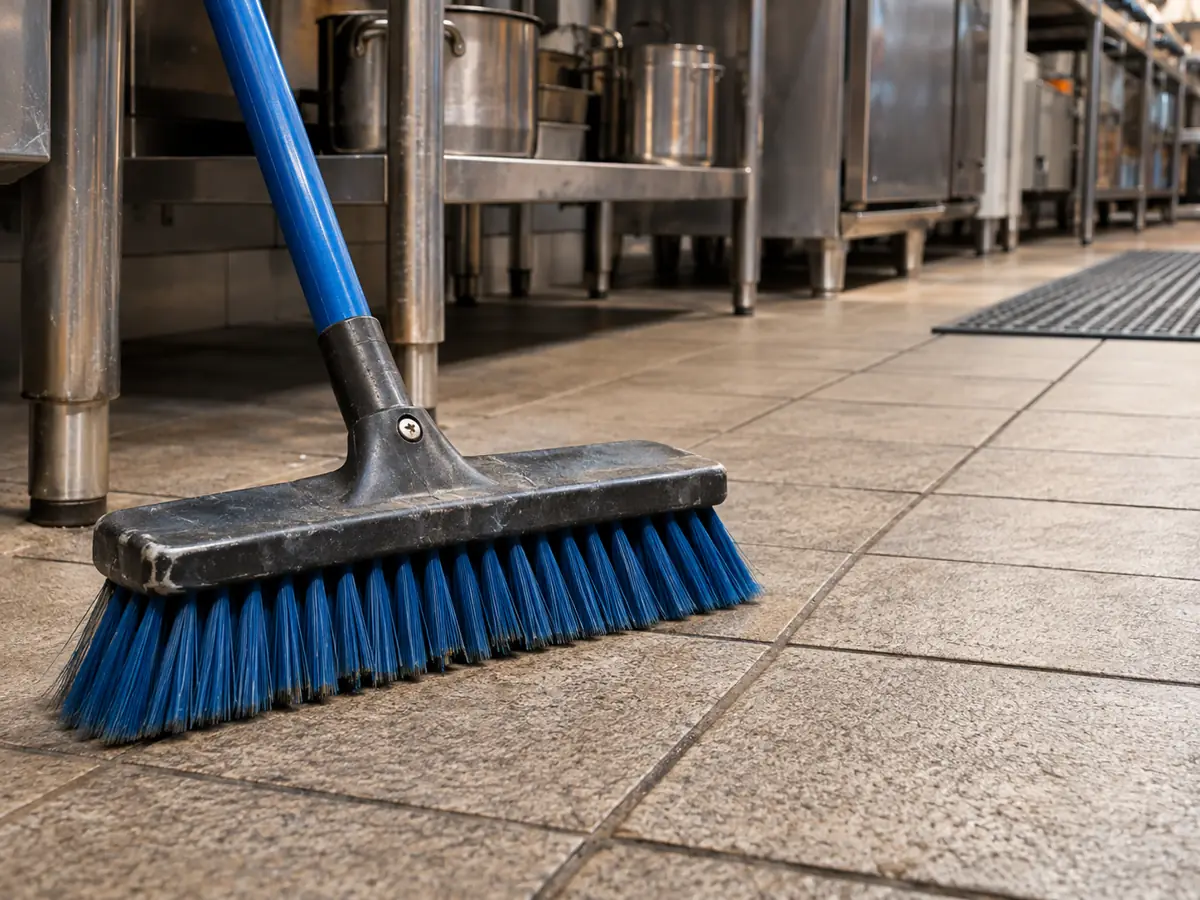
Editorial illustration
Identify the problem before choosing a method
Describe where the buildup appears and how quickly it returns. Is it concentrated beside the cooking line, along a waste route or at a transition? Note whether the condition appears before service, during a shift or after cleaning.
Grease is only one possible factor. Moisture, product residue, damaged flooring and leaks can also affect floor condition. Cleaning cannot repair a damaged surface or eliminate a continuing leak. Report these issues separately so the appropriate person can address them.
What a clear degreasing scope should cover
List the exact floor zones, accessible edges and baseboards. Include the areas beneath or behind equipment only when access and movement responsibilities have been agreed. Specify exclusions rather than leaving them to a cleaner’s judgment on arrival.
A professional plan should consider soil removal, a material-compatible cleaning process, any required rinsing or recovery and the condition needed before reopening the area. Product selection, dilution and use should follow the relevant label and surface guidance; stronger is not automatically better.
Why access and timing matter
- Confirm when food preparation ends and the floor area becomes available.
- Assign responsibility for moving permitted items.
- Protect or isolate adjacent areas according to the facility’s procedures.
- Plan a route that avoids people walking through the work.
- Allow the area to be ready for use before staff return.
Do not ask a cleaner to disconnect or move equipment without the necessary authorization and safe procedure. The job may need to be divided into zones when the kitchen cannot be fully closed.
Keep the result from becoming a one-time reset
After detailed cleaning, review how spills, grease transfer and routine maintenance are handled. Track recurring trouble spots and discuss whether the issue is the daily process, access or service interval.
Back-of-house cleaning can include an agreed floor-care plan, while scheduled deep cleaning can address additional detail work. The two should support one another without leaving ownership gaps.
Questions to ask before booking
Will degreasing make the floor permanently slip-proof?
No. Floor condition changes with use, spills and wear. Continue the facility’s inspections and immediate-response procedures.
Does the service include drains, hoods and cooking equipment?
Not unless those items are explicitly included. Floor degreasing is a specific scope, not an automatic whole-kitchen service.
How do we judge the result?
Review the agreed zones together and document any remaining soil, access limitations or maintenance concerns. Do not treat appearance alone as a technical slip-resistance test.
Build a cleaning plan around your restaurant
Tell us about your facility, operating hours and cleaning priorities. Alpha Cleaners will confirm the service scope and availability during a complimentary walkthrough.