How Often Should Restaurant Dumpster Pads Be Cleaned?
The right dumpster pad cleaning frequency depends on what happens between visits. Waste volume, handling practices, leaks, weather and pickup arrangements all affect the area. Begin with regular condition checks and use those observations to agree a realistic service schedule.
By Alpha Cleaners · Cleaning guides
Editorial illustration
Inspect the whole waste-handling route
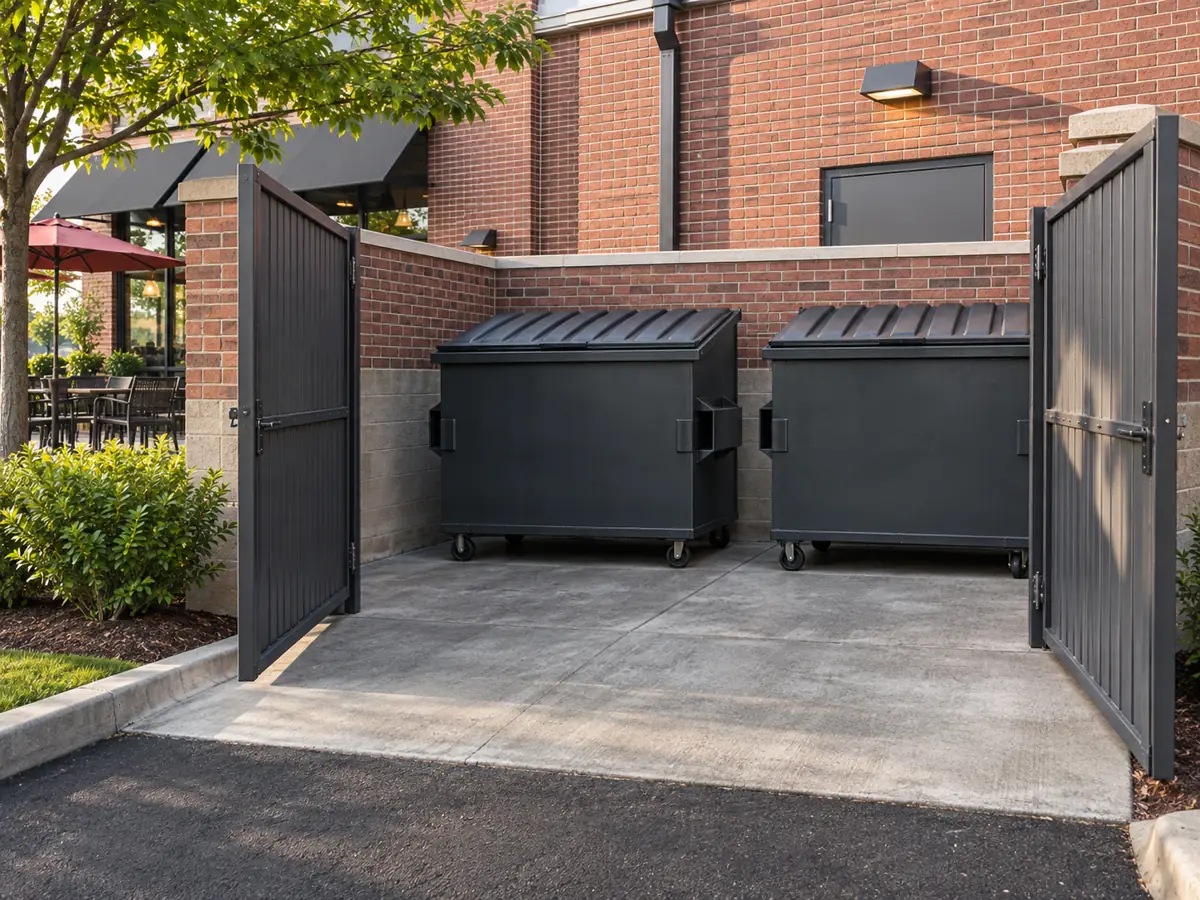
Look beyond the concrete directly beneath the containers. Check the route from the restaurant to the enclosure, the gate area and the points where bags or bins are transferred. Record loose debris, visible residue, standing water, recurring odors and damaged containers.
A cleaning visit cannot correct every source of a recurring problem. A leaking container, unreliable collection or poor waste handling needs attention from the responsible team. Keep cleaning, waste collection, pest management and maintenance responsibilities distinct so the issue reaches the right person.
Use conditions to set the interval
A useful starting discussion covers the type and volume of waste, how quickly residue returns, the availability of the pad after collection and any changes during busy periods. Review conditions over a representative operating period instead of choosing an interval based only on another restaurant’s schedule.
- Increase attention when visible buildup returns before the next planned visit.
- Coordinate access with collection where practical.
- Reassess after changes in waste volume or container placement.
- Plan for weather that limits safe access or service.
These are planning considerations, not a universal cleaning timetable or a statement of local requirements.
Confirm access and wastewater arrangements
Before work, identify the surface, nearby drainage, utilities and adjoining areas that may be affected. Ask the provider how wash water will be contained and handled for that particular site. Do not assume that an available drain is an approved disposal route; confirm applicable arrangements with the relevant local authority or utility.
Discuss whether containers need to be moved, who is permitted to move them and whether a collection schedule creates a usable access window. Keep people and deliveries away from the work zone according to the agreed site procedure. Avoid promising complete stain removal without assessing the concrete and existing condition.
Connect cleaning to everyday management
A scheduled service works better when the restaurant also has a routine for loose waste, closed lids and reporting damaged containers. Assign someone to check the enclosure and record repeat issues. Include the waste contractor or property manager when the restaurant does not control the equipment or shared pad.
For a shared enclosure, clarify boundaries before commissioning work. One tenant’s request may not cover the whole area, and access may affect other businesses. A written scope should make the service area and the responsible contact clear.
Common scheduling questions
Is monthly cleaning always enough?
No single interval fits every restaurant. Use site condition and operating patterns to review the schedule.
Does pad cleaning include waste removal?
Do not assume so. Confirm loose debris, container handling and collection responsibilities separately.
Can Alpha Cleaners assess the area?
Discuss the enclosure during a walkthrough and review our dumpster pad cleaning service. Bring collection details and any property-manager instructions so the proposal reflects the actual site.
Build a cleaning plan around your restaurant
Tell us about your facility, operating hours and cleaning priorities. Alpha Cleaners will confirm the service scope and availability during a complimentary walkthrough.