Daily vs. Weekly vs. Monthly Restaurant Cleaning
Daily, weekly and monthly labels are useful planning tools, but they are not universal rules for every restaurant task. Build the schedule around your operation, the condition of each area and applicable procedures. The goal is to prevent gaps between staff duties and contracted cleaning.
By Alpha Cleaners · Cleaning guides
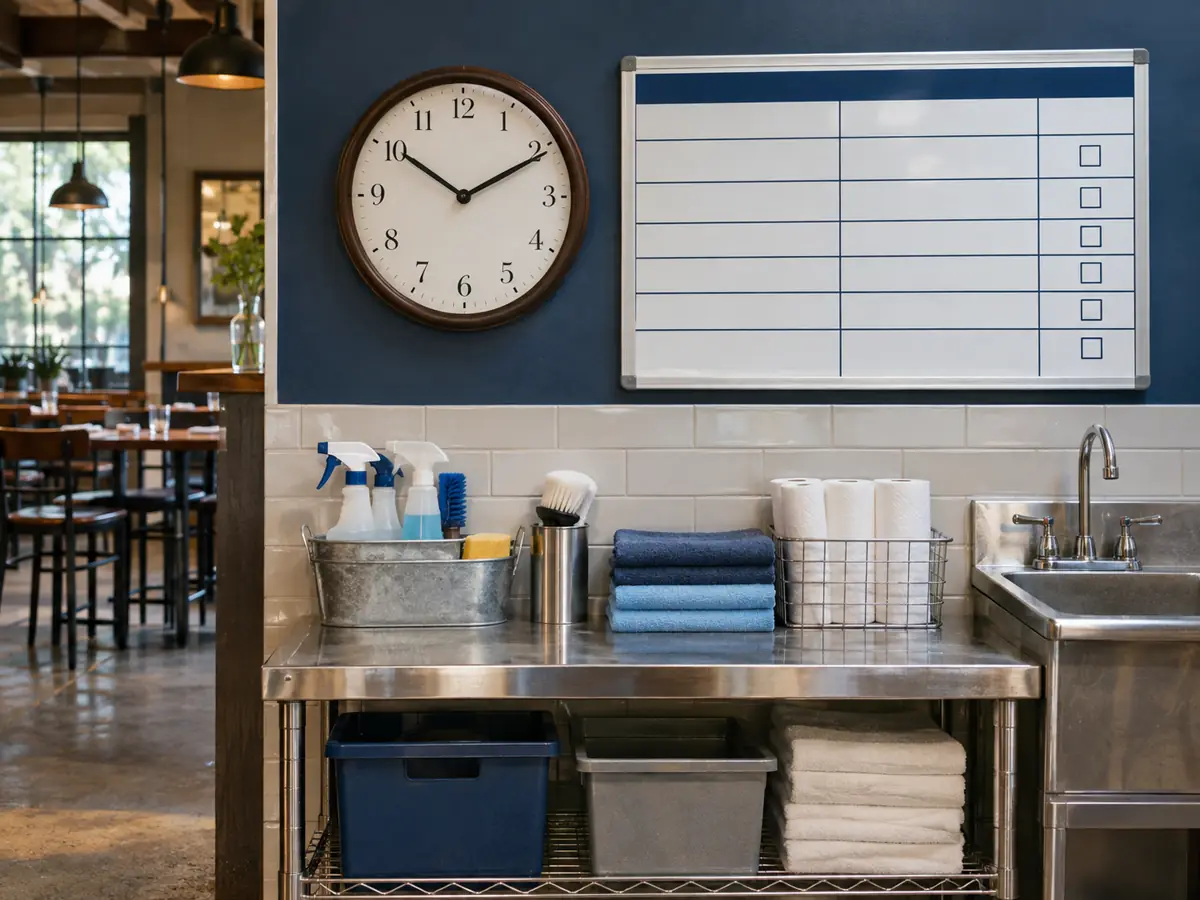
Editorial illustration
Daily work keeps the restaurant operating
Daily responsibilities typically focus on the areas affected by each service period: visible debris, spills, guest-facing presentation and the closing routine. An immediate spill should be addressed when it happens, not saved for a scheduled cleaning visit.
Assign ownership by shift or zone. If restaurant staff handle food-contact surfaces while a contractor handles floors, state that clearly. Keep required food-safety procedures and equipment instructions separate from a general housekeeping schedule.
Weekly is a review point, not a default for every task
Use a weekly review to look beyond the obvious areas. Check accessible edges, corners, ledges and spaces that are easy to overlook during a busy close. Decide which detail tasks need a recurring slot and which need a different interval.
If a task consistently needs attention sooner, change the schedule. If the area is inaccessible, simply increasing frequency will not resolve the problem. Agree on when and how access will be provided.
Monthly planning helps coordinate larger work
A monthly management review can bring together planned deep cleaning, maintenance, supply issues and recurring complaints. It does not mean every deep-cleaning task must happen once a month.
Review upcoming closures, high-volume periods and changes to the menu or layout. Schedule detail work when the restaurant can provide enough time for the process and a proper handoff. Confirm any specialist work separately.
Use a schedule with four useful columns
- Task and area: name the specific surface or zone.
- Timing or trigger: state a planned interval or a condition that requires action.
- Owner: identify restaurant staff, the cleaning contractor or a specialist.
- Verification: record who checks completion and handles exceptions.
For example, a kitchen floor inspection may reveal a recurring buildup area that needs a revised back-of-house scope. A dining-room review may identify a seating layout that prevents access beneath tables. The action should address the cause, not just add another checkbox.
Reassess instead of letting the schedule become stale
Hold a brief review after service begins and whenever operations change. Compare repeat issues with the task list. Was the task missing, the timing unrealistic or the responsibility unclear? Update the written plan and make sure both teams receive it.
Can recurring cleaning replace deep cleaning?
It can reduce some buildup, but periodic work may still be needed where routine access or time is limited.
Should every restaurant use the same schedule?
No. Hours, cooking activity, layout and volume differ. A walkthrough helps turn a generic list into a practical plan.
Who should maintain the schedule?
Assign one restaurant contact to manage changes with the provider so instructions remain consistent across shifts.
Build a cleaning plan around your restaurant
Tell us about your facility, operating hours and cleaning priorities. Alpha Cleaners will confirm the service scope and availability during a complimentary walkthrough.